Table of contents
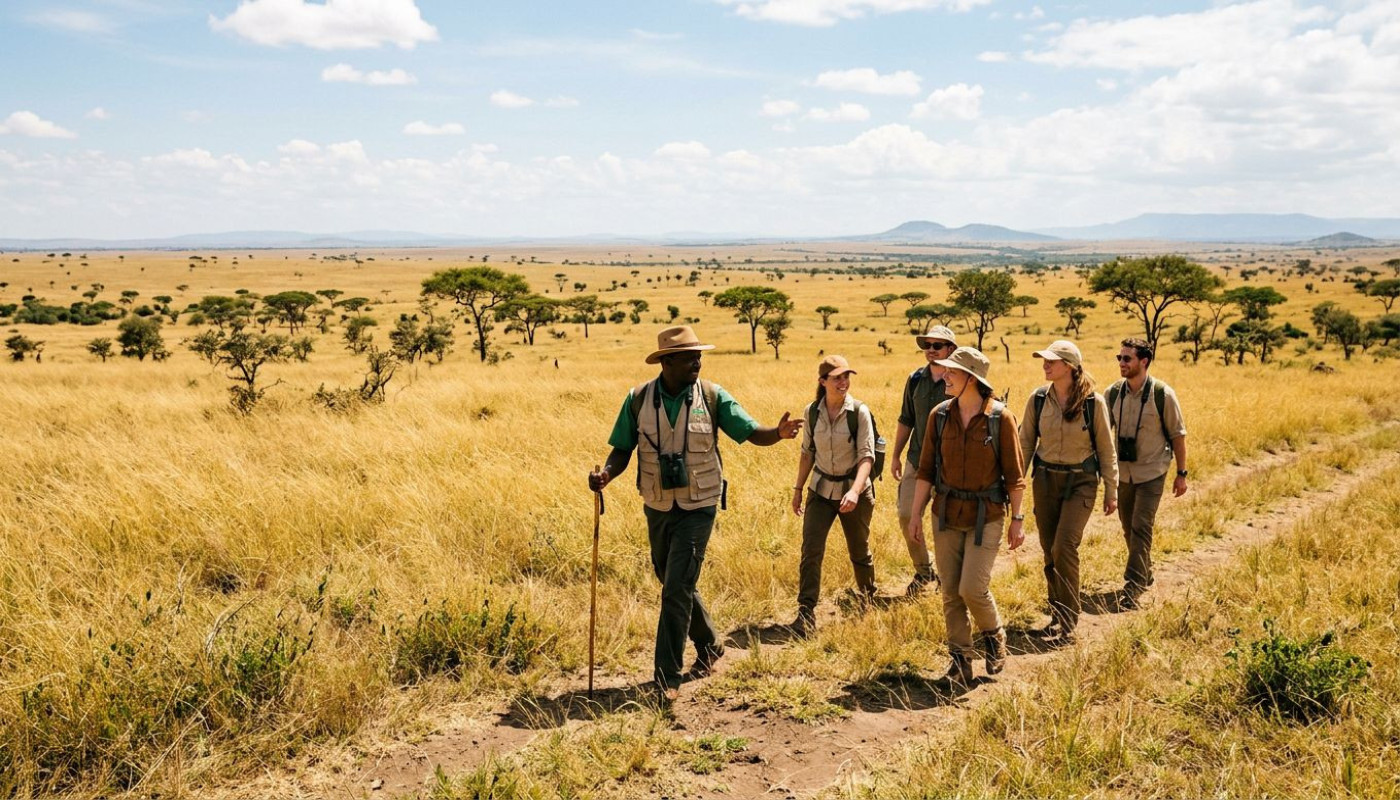
On the dusty edge of the Savannah, where GPS signals fade and roadside signs can mislead as often as they help, the most decisive travel upgrades are rarely a new camera or a sturdier suitcase. They are human. From Kenya’s Maasai Mara to Tanzania’s Serengeti and down into South Africa’s private reserves, a growing number of travelers are planning around one key variable: the local guide who can read the land, translate the culture and, when things go sideways, keep the trip intact.
“We would’ve missed everything”
How many “once-in-a-lifetime” moments slip by unseen? In the Savannah, that question is not philosophical, it is practical, because wildlife does not wait for late arrivals and it certainly does not pose on schedule. Guides change what you notice, when you arrive and how you interpret what you are seeing, and the differences are measurable in time on the road, animals spotted and, crucially, how close you get without crossing ethical lines.
Consider the arithmetic of a morning drive in a major reserve: gates open early, temperatures are low and predators are still active, and then, as the sun climbs, movement slows. A guide who knows which riverbend holds water longest in August, which acacia line becomes a corridor at dawn and which tracks are fresh enough to follow can compress hours of trial-and-error into minutes of informed decisions. In visitor surveys across East and Southern Africa, the most repeated complaint about self-driven or poorly guided safaris is not the lack of “Big Five” sightings, it is the feeling of being out of sync with the landscape, arriving at the right places at the wrong times.
Local expertise also reshapes the ethics of the encounter. As overtourism and vehicle congestion become recurring issues in iconic sightings, from cheetah hunts to leopard cubs in trees, trained guides increasingly act as de facto regulators. They keep appropriate distance, limit the time spent at a sighting and avoid pressuring animals into unnatural behavior, and travelers notice. The best stories from the Savannah often hinge on restraint: the guide who refuses to crowd a kill site, the driver who turns away from a jam to protect the animal, the tracker who chooses silence over spectacle so that the moment stays real. In practice, that restraint can produce better viewing anyway, because calm animals linger longer and behave naturally.
When the road fails, humans don’t
Engines stall, rains arrive, plans unravel. The Savannah has a way of testing itineraries, especially during shoulder seasons when weather swings can turn hard-packed tracks into slick trenches, and a “short cut” becomes an hour of digging. This is where guides stop being interpreters and become risk managers, coordinating radios, liaising with rangers and deciding when to push forward and when to retreat, and those choices can determine whether a trip becomes an anecdote or a crisis.
Travel insurance and satellite phones matter, but the first line of resilience is often local competence. In many parks and conservancies, guides operate within networks that travelers cannot easily access: ranger posts, nearby camps, mechanics who can reach a stranded vehicle and, just as importantly, knowledge of which routes remain passable after an afternoon storm. In places where distances are vast and infrastructure thin, that social and geographic map is more valuable than any app. A guide who has driven the same corridor for years knows where the sand deepens, where elephants frequently block a track at dusk and where a river crossing becomes unsafe, and they make decisions before the situation becomes urgent.
There is also a quieter kind of failure that guides avert: cultural missteps that strain interactions and diminish trust. In villages near protected areas, tourism is not merely “authentic experiences,” it is livelihoods, land negotiations and sometimes contested boundaries. A guide who understands local protocols can prevent unintentional offense, and can explain why certain questions or photos are sensitive, and then, with the right introductions, open doors that would otherwise remain closed. That mediation matters more today as communities demand a clearer share of tourism’s benefits, and as visitors increasingly ask how their money circulates. If you want a trip that stands up ethically as well as emotionally, who you travel with is part of the answer.
The stories that never reach brochures
Forget the brochure language; real travel happens in the margins. The most enduring guide-led moments are often not the marquee sightings, but the unscripted scenes: a herd moving through smoke after a distant burn, a sudden hush when a lion roars beyond the grass and you feel the sound in your chest, and the guide’s calm explanation that keeps fear from turning into panic. These are not clichés when you are there, they are sensory facts, and a skilled guide turns them into memory without turning them into theater.
Travelers tell similar “behind the postcard” stories across the Savannah. One couple recalls arriving at a waterhole just after sunrise and seeing nothing at first, only for their guide to point to a patch of “empty” shade where a leopard’s tail flicked once, almost imperceptibly, and then vanished. Another group describes how their driver stopped the vehicle to listen, not to look, because the alarm calls of birds changed pitch, and within minutes they watched a serval stalking in high grass that they would have dismissed as uniform green. These are the kinds of sightings that do not happen because nature is generous, they happen because someone knows what to listen for.
Good guides also narrate complexity, not just animal behavior. They explain how drought patterns shift migration timing, why controlled burns are used in some landscapes and avoided in others, and what conservation trade-offs look like on the ground. That context turns “seeing wildlife” into understanding a living system, and it changes how travelers talk about the trip afterward. Instead of listing animals like trophies, they describe relationships: predator and prey, water and vegetation, communities and park rules, tourism revenue and anti-poaching patrols. The Savannah, in other words, becomes more than a backdrop.
Choosing a guide: questions that matter
Do you want a driver, or a professional guide? The difference is not semantics. In many destinations, “guide” can mean anything from a licensed naturalist with years of field training to someone who simply knows the roads, and the gap shows up in safety, quality of interpretation and the ethics of wildlife viewing. Asking the right questions before you book is not fussy, it is how you protect the experience you are paying for.
Start with credentials and local integration: Is the guide formally trained and licensed where required, do they work regularly inside the parks you will visit and do they coordinate with rangers and conservation teams? Then ask about style: Do they prioritize tracking and wildlife behavior, cultural context, photography-friendly pacing or a mix, and how do they handle crowded sightings? A serious professional will answer clearly, and they will not promise guaranteed “Big Five” checklists, because nature does not sign contracts. Instead, they will describe how they plan a day around weather, animal patterns and park rules, and they will explain what they do when conditions change.
Finally, ask how your money flows, because the most responsible trips are increasingly the most satisfying ones. Does the operator employ local staff year-round, support community projects, pay park and conservancy fees transparently and invest in conservation rather than marketing alone? For travelers comparing options, resources and specialist operators can help map what is available, and i was reading this while looking at how itineraries are structured across Southern Africa, from reserve logistics to guided experiences that hinge on local knowledge. The point is not to outsource judgment, it is to have enough information to choose well.
Booking smart, spending well
Book early for peak dry season, and keep a buffer for internal flights and park fees, which often rise with demand. Set a realistic budget for tips, conservation levies and unexpected route changes. Check whether your trip qualifies for local tourism incentives or regional packages, and confirm cancellation terms before you pay, because weather and wildlife do not respect calendars.
Similar articles