Table of contents
Overtourism is reshaping travel choices, from Venice’s day-tripper limits to Amsterdam’s pushback against party tourism, and the ripple effect is clear in the numbers: in 2024, international tourist arrivals reached 1.4 billion, about 99% of pre-pandemic levels, according to UN Tourism. Against that backdrop, more travelers are asking a simple question, and spending accordingly: are the best trips now found away from marquee capitals, in villages where daily life still sets the pace and local economies feel the impact of each visitor?
Fame sells, but crowds set the tone
Ask any frequent traveler what has changed most in the last decade and the answer often lands on the same word: density. The famous-city “greatest hits” still deliver, but they increasingly come wrapped in queues, timed-entry systems, and streets engineered for throughput rather than surprise. UN Tourism’s latest baseline shows global travel demand is back at scale, and that scale concentrates quickly in a handful of urban icons, because the airline routes, hotel inventory, and social-media geography all pull in the same direction.
That concentration is not only an aesthetic problem, it is a practical one, and it starts to shape the kind of experience people actually have. In high-demand capitals, the top museums and heritage sites rely on reservation systems, which can be efficient but also rigid; the visitor’s day becomes a chain of slots, tickets, and transit. Prices follow the pattern: within the euro area, accommodation inflation has been a persistent post-2021 story, and even when headline inflation cools, weekend room rates in the most visited cities can remain stubbornly high because occupancy stays elevated.
Hidden villages do not magically remove frictions, yet they often redistribute them in a way that feels more human. Instead of fighting for a restaurant table at 19:30, you might plan around the day’s market, the pub quiz, or the last bus back over the hill. The “authenticity” travelers chase is sometimes just that: a sense that local routines are not endlessly adapted to visitors, and that the visitor must adapt a little instead.
Still, the trade-off is real. Famous cities concentrate cultural institutions, late-night transport, and multilingual services; villages rarely can, and should not, compete on the same terms. The question becomes less about which is “better” and more about what kind of value matters now: maximum sightseeing per hour, or a slower itinerary where conversation, weather, and chance encounters count as the point, not the gap between points.
In villages, the small details matter
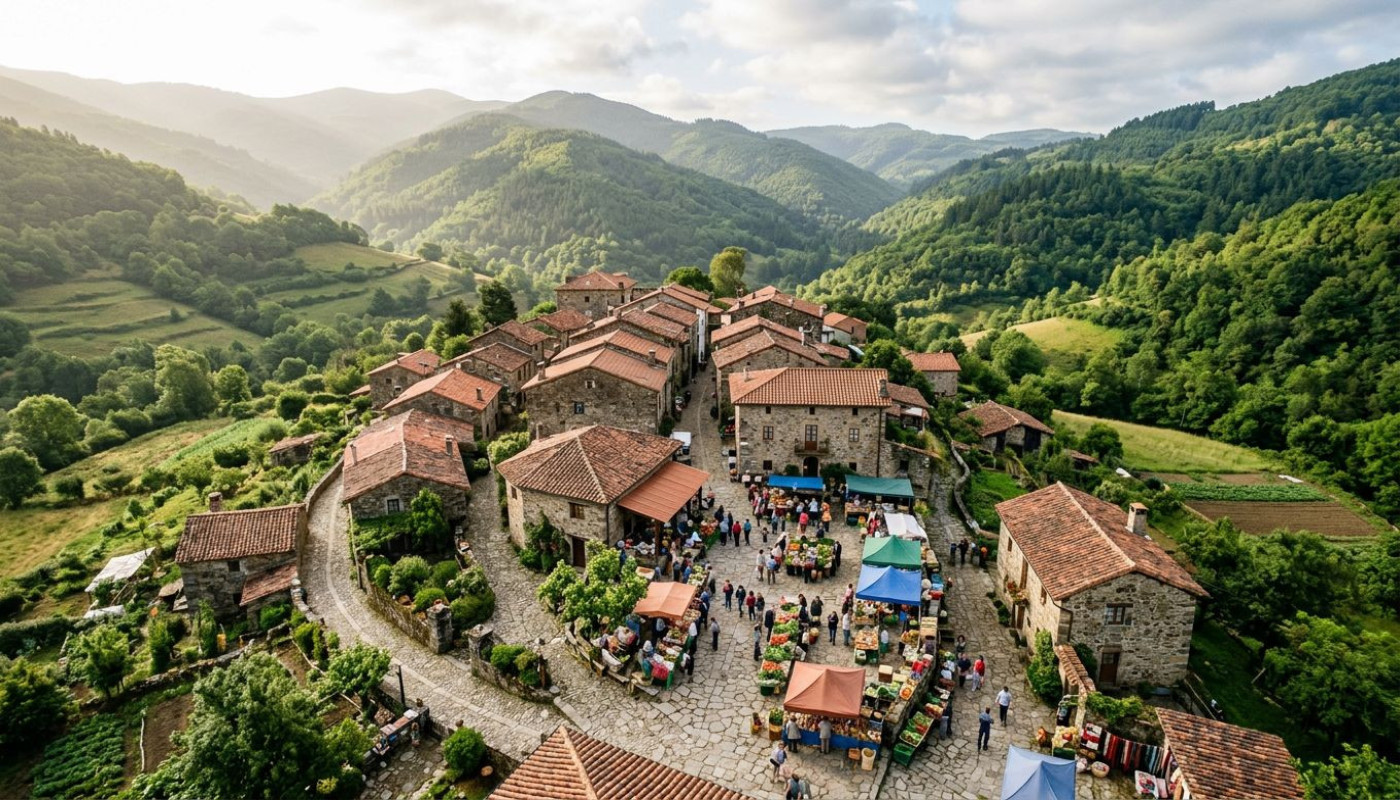
Can a place feel “authentic” when it is curated for tourists? That tension sits at the heart of the village-versus-city debate, and it is why hidden villages can sometimes win by doing less. Their appeal is frequently built from micro-experiences that do not scale well: the baker who recognizes regulars, the bartender who explains the local rivalry, the walk where the loudest sound is the wind and your own footsteps. Those are not attractions in the traditional sense, yet they are precisely what many travelers say they remember.
Data backs part of this behavioral shift, even if “authenticity” itself is hard to quantify. The European Commission’s 2024 Eurobarometer on tourism shows travelers continue to prioritize value for money and climate considerations, and many respondents express interest in less crowded destinations. Meanwhile, the rise of remote and flexible work has turned short breaks into longer stays for some travelers, making a quieter base more attractive than a capital where every hour feels monetized.
Hidden villages also tend to reveal a different relationship with time, and that is often where the experience tilts from “pleasant” to “memorable”. Shops close because it is lunchtime, not because the staffing model says otherwise. A festival disrupts the bus schedule and nobody apologizes, because it is the festival that matters. Even the landscape plays a role: in smaller places, you are rarely far from the edge of town, and that proximity to fields, coastlines, or hills changes how the day feels.
Yet authenticity can be fragile, and villages can be overwhelmed quickly because their capacity is small. A single viral video can double weekend footfall, strain parking, and push short-term rentals into the housing stock. What looks like “discovery” from the outside can feel like abrupt pressure from the inside. The most rewarding hidden-village trips, paradoxically, often involve restraint: traveling off-peak, staying longer rather than hopping through, and spending locally in ways that support year-round life rather than seasonal spikes.
Dublin’s sidelines: quieter streets, real stories
Is it possible to experience a famous city without being trapped in the famous version of it? Dublin is an instructive case because it draws strong international demand, yet it also rewards the traveler who steps laterally, away from the central circuit. The usual landmarks are there, and they are worth seeing, but the city’s character often emerges in the in-between spaces: small venues, neighborhood cafés, independent shops, and coastal or village-like edges that sit within easy reach of the center.
This is where planning matters. Dublin’s accommodation can be expensive at peak times, and major events can tighten availability; the upside is that day-to-day movement can be straightforward if you structure the trip around a few anchors and leave room for the rest. Neighborhood exploration is not a consolation prize, it is frequently the main event, especially when you pair it with short excursions that deliver a “village feel” without the logistics of a full relocation.
Practical travelers increasingly build itineraries that blend the two worlds: a couple of headline sites, then a shift toward smaller, story-driven experiences, whether that means a walk along the coast, an evening in a local pub that prioritizes conversation over spectacle, or a day trip that trades museum density for sea air and unhurried lunches. If you want an idea of how to stitch those days together, including options that lean into local texture rather than just checklists, https://www.dublin-spirit.com/ offers a useful starting point for planning Dublin with that “sidelines” mindset.
The larger point is that “hidden” does not have to mean remote. In and around Dublin, quieter experiences can be found by timing, routing, and intent: traveling early, choosing a neighborhood base, and resisting the pressure to treat every hour as a race. The reward is a city that feels less like a product and more like a place, which is often what people mean when they say they want authenticity, even in a destination with global name recognition.
What authenticity costs, and who pays
Who benefits when travelers pivot from famous cities to hidden villages? The answer depends on how the trip is built, and whether spending supports local livelihoods or simply extracts atmosphere. In many small places, tourism income can be vital, particularly for hospitality and retail, and it can help sustain services that would otherwise disappear. But the same demand can inflate housing costs, hollow out communities through short-term rentals, and create a seasonal economy that leaves workers insecure off-peak.
Famous cities face their own version of the problem, just at scale. Managing visitor flows has become a political issue across Europe, and city authorities are experimenting with regulations, taxes, and marketing shifts designed to change behavior. For travelers, that translates into a new set of realities: booking ahead, paying city levies, and accepting that some areas prioritize residents’ quality of life over unrestricted access. The upside is that governance capacity is usually stronger in big cities; the downside is that the experience can feel increasingly managed.
In villages, governance is often lighter, and the visitor’s impact is proportionally larger. That makes responsible choices more consequential. Staying two or three nights rather than arriving for a brief “photo stop” tends to spread spending and reduce the pressure of constant turnover. Choosing locally owned accommodation and restaurants keeps more money in the community, and traveling outside peak weekends can reduce the strain on services. Even transport decisions matter: where public options exist, using them can ease parking and road congestion that residents live with year-round.
Authentic travel, in other words, is not a trophy awarded by geography, it is an outcome shaped by behavior. Hidden villages can outshine famous cities when they offer what cities struggle to provide at high volume: quiet, continuity, and the feeling that you are present in a place rather than passing through a brand. But they only keep that edge if travelers treat them as communities first, and content backdrops second.
How to book smarter this year
Reserve early for peak dates, and keep midweek stays in mind; they often cut costs and crowds. Set a clear budget for lodging and meals, then protect time for unplanned wandering, which is where villages shine. Check local or national schemes for discounted public transport, museum passes, or youth and senior fares, because small savings add up fast on multi-stop trips.
Similar articles