Table of contents
Dawn in the mountains, neon after midnight, and the quiet, unscripted moments in between, travel is being redefined by what happens off the checklist, as more visitors look beyond monuments and “must-see” routes to chase experiences that feel local, physical, and memorable. In 2024 and 2025, tourism authorities across Asia have leaned into this shift, highlighting community markets, nature trails, and creative districts to spread crowds and extend stays. The result is a different kind of itinerary, one built around small surprises that end up defining the journey.
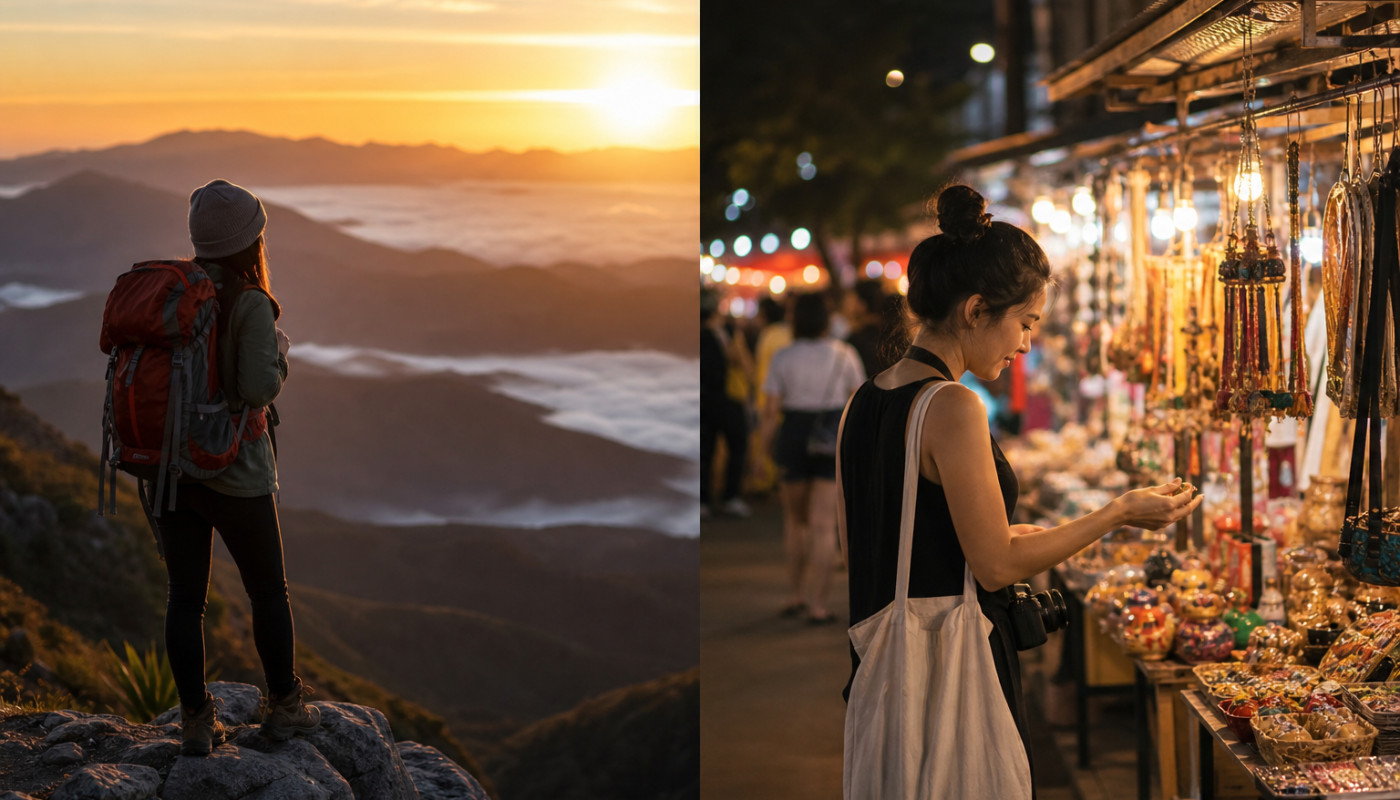
Sunrise starts before the city wakes
Set the alarm early or miss the point. A sunrise hike is not just a view, it is a temperature change, a rhythm shift, and a small test of will that many travelers now treat as the real opening scene of a trip, because the first hours of the day are when landscapes feel least staged and most alive. The appeal is measurable: long before “sleep tourism” became a headline, hiking was already one of the biggest motivators for nature-driven travel, and it has only grown with the post-pandemic appetite for outdoors. In the United States alone, the outdoor recreation economy contributed $1.2 trillion to GDP in 2023, according to the U.S. Bureau of Economic Analysis, a sign of how much money and time people are willing to devote to activities that start with shoes on, not phones out.
In Asia, where heat and crowds can peak fast, early starts are also practical. Trails are cooler, air quality is often better, and wildlife is more active, and there is a social dimension too, because you are sharing the path with locals who are not on vacation at all. That mix changes the traveler’s posture: less spectator, more participant. A good sunrise hike is not necessarily the hardest; it is the one that fits your body and your timing, and that means checking elevation gain, trail conditions, and transport options the night before, then packing water, a light layer, and a headlamp rather than improvising at 5 a.m. The reward is rarely just the “golden hour” photo, it is the quiet competence you carry into the rest of the day, a feeling that you have already earned the city you are about to enter.
Night markets rewrite the dinner plan
Forget the reservation. Night markets are the kind of place where an itinerary loosens on purpose, because the smartest move is to arrive hungry, walk a full lap, and then decide, and that single habit tells you something about a destination’s daily life. The numbers show why these spaces matter: in Thailand, tourism remains a central engine of the economy, with the sector’s direct and indirect contribution widely estimated around one-fifth of GDP in recent years, and the country’s policy focus has increasingly shifted toward higher-value, longer-stay travel rather than sheer volume, a strategy covered repeatedly by Thai authorities and international institutions. Night markets, with their low barrier to entry and their ability to distribute spending across hundreds of small vendors, are a natural fit for that model.
What defines a night market is not only street food, it is the sensory collage, smoke and music, bargaining and laughter, plastic stools and shared tables, and the way strangers become temporary neighbors. You learn quickly how a place eats: which dishes are snacks, which are full meals, how people balance sweet and spicy, and what time families arrive versus groups of friends. Travelers who want more than a quick browse can treat the market as reporting rather than grazing, noticing prices, portion sizes, and lines, and asking why one stall is busy while another is quiet. Practicalities matter: bring cash in small notes, keep valuables close, and pace yourself, because the best markets reward curiosity over speed. If you want a reliable way to map options and plan routes without losing spontaneity, https://www.chiangmai-trip.com can help you navigate neighborhoods, timings, and the small logistical details that decide whether the evening feels effortless or exhausting.
The city reveals itself on two wheels
Walk far enough and you learn a street; ride far enough and you learn a city. Cycling, whether on a rented bike, an e-bike, or a guided route, has become a defining activity for travelers who want to cover real ground without sealing themselves inside a vehicle, and the trend is visible in policy as well as behavior. The European Cyclists’ Federation has repeatedly pointed to the economic power of cycling tourism, estimating in prior analyses that it contributes tens of billions of euros annually across Europe through accommodation, food, and services, and while the infrastructure varies widely by region, the logic travels well: bikes create a human pace with a wider radius.
On two wheels, the “in-between” becomes the point. You pass morning markets being set up, school gates at dismissal, small workshops with open doors, and neighborhoods tourists rarely reach on foot, and those scenes build an internal map that no landmark can provide. Cycling also forces a different attention to safety and etiquette, and that is part of why it sticks in memory, because you are negotiating space, reading traffic, and making real-time decisions rather than floating through a curated corridor. The best rides are not necessarily the longest; they are the ones with a story arc, a river path that turns into back lanes, a coffee stop that becomes a conversation, a temple courtyard that appears when you take the “wrong” turn. To make it work, choose a bike that fits, wear a helmet when available, and ride at off-peak hours, and if you are in a city where heat is heavy, start early and plan shade breaks, because comfort is what allows attention, and attention is what turns movement into meaning.
Workshops turn souvenirs into skills
Buying a souvenir is easy; making one is different. Workshops, cooking classes, craft sessions, and short cultural courses have surged as travelers look for experiences that feel tangible and transferable, and this is not only anecdotal. The UN World Tourism Organization has highlighted experiential travel and community-based offerings as key levers for dispersing tourism benefits and reducing pressure on over-visited sites, and small-group workshops fit that framework neatly, because they channel spending into local expertise and create stories travelers actually repeat when they get home.
The most memorable sessions are rarely the most polished. They happen in working kitchens, small studios, and family-run spaces where instructions include personal history, and where you learn the difference between following steps and understanding a method. A cooking class, for example, teaches you taste, not just recipes, and it also teaches you shopping, because many begin with a market visit that explains ingredients in context, the seasonal logic, the regional preferences. Craft workshops add another layer: patience. You discover why a pattern takes hours, why a tool is shaped the way it is, and why “handmade” is not a marketing word but a physical reality. The practical advice is simple: choose small groups, ask what you will actually do with your hands, and confirm what is included, transport, materials, and take-home items, because the best workshops do not feel like entertainment, they feel like participation, and participation is what makes a trip linger long after the flight home.
Booking smart, spending wisely
Build your trip around two anchors, then leave space. Reserve sunrise hikes with transport, popular workshops, and any limited-entry experiences early, and keep night markets, neighborhood rides, and casual food stops flexible. Set a daily budget for meals and transit, and check local discounts or city passes when they exist, because small savings add up quickly and free cash for the unexpected detour that becomes the highlight.
Similar articles


